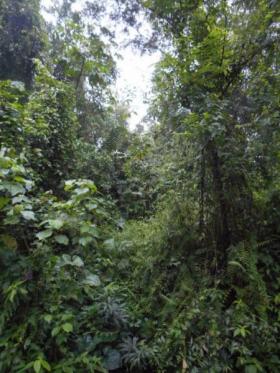
Get involved to help wildlife


"Never doubt that a small group of thoughtful, committed citizens can change the world;
indeed, it's the only thing that ever has." 
Margaret Mead, American anthropologist, 1901-1978


Search Take Action for Wildlife Conservation


 RSS Feed

  1.  

    There are some charities which really do strike a chord with you and make you sit up and think, "Wow".

    The World Land Trust does it for me.   I think it's an amazing charity.  It protects the world's most important and threatened wildlife habitats, acre by acre.

    In fact, you can sponsor or give the gift of an acre, which makes for a marvellous gift because it lasts.

    Since it was founded in 1989 - so not that long ago compared to other charities - the World Land Trust has funded partner organisations around the world to create reserves, and thereby give permanent protection to habitats and wildlife.

    Habitats are vital to wildlife.  They matter.  Without a healthy habitat to live in, wildlife can't survive. 

    The World Land Trust has just succeeded in raising funds for a wildlife corridor in India, linking two tiger reserves.   The animal who'll probably benefit most from this corridor is the Indian elephant.  Elephants needed a safe passage to travel between two Ghats mountain ranges for food and mates.  The funding is being used for land exchange:  the landowner can continue subsistence farming, but away from the passage.   The elephants have been raiding crops as they pass between villages which of course caused conflict between people and elephants.  Hence the appeal was called the Elephant Corridor Appeal

    The success of the World Land Trust's campaign is critical because it gives safe passage to Indian elephants passing through the Mudahalli corridor between the Eastern and Western Ghats, and that can now be secured.  On this occasion, the Trust worked with the Wildlife Trust of India

    So far, Barking Deer, Black-naped Hare, ChitalSambar DeerSloth Bear and Wild Boar have all been seen in the corridor forest and extension area, as well as tigers and elephants. 

    This is all thanks to the supporters of World Land Trust's campaign.   People (no doubt from all over the world, although the Trust is based in the UK.

    To me, news like this is fantastic.  This was an effort by a lot of people who were willing to put money into securing this wildlife corridor.   It reinforces what can be done by people coming together to make a difference.

    We can all create change by acting as individuals, but how much greater our power is when we come together!

    Elephants of India, enjoy your wildlife corridor.  Be safe. And thank you World Land Trust for the amazing work you and your partners do. 


  2. It’s great to hear about initiatives people can join in with - and better to hear that people are actually joining up and making a difference.

    This morning I discovered that Butterfly Conservation (who work to conserve butterflies) have an initiative called Plant Pots for Pollinators.

    It’s an amazing project.   Butterfly Conservation are asking people to plant a pot or pots for pollinators – butterflies and bees.

    Butterfly Conservation says the UK has 1,500 pollinating species – bumblebees, honeybees, hoverflies, beetles, wasps, butterflies and moths.  Changes in land use and the way it’s managed are destroying vital wildlife habitat on farms, woodlands, towns and cities.  We need to look after our pollinators. 


    Over 80% of EU crops and 80% of wildlflowers need insect pollination.   Pollinators can only look after us, if we look after them.   And if we provide habitat for them, they will come.   The sight of colourful butterflies fluttering around your garden thanks to your efforts is a truly lovely one.   There’s something very relaxing about listening to bees buzzing around flowers. 

    So the more plants we pot and grow for our pollinators, the better. 

    There’s a planting guide with suggestions of what butterflies like

    The Plant Pots for Pollinators scheme is sponsored by B&Q, so watch for Butterfly Conservation events at some B&Q stores. 

    And you can add your pot to Butterfly Conservation’s interactive map, which shows how many people have planted a pot and where in the country that pot is.     So far, 340 plant pots have been planted.  

    Go potty for pollinators this summer!


  3. There's a saying, "what goes around, comes around" and you could apply that to rubbish.

    The problem is that when we let a balloon go, or chuck a plastic bag away, there's no telling where the wind will take it.  Bags are just taken with the wind, out of rubbish bins, land fill, rubbish trucks, and there's no way of knowing where it will come to land.
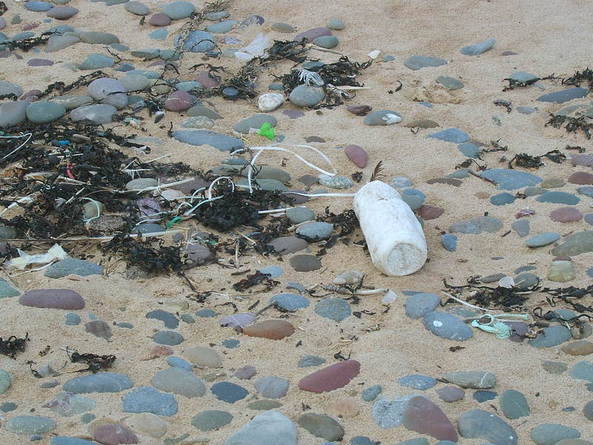
    Litter, litter, everywhere - who knows where it will end up?

    The Marine Conservation Society has the results of its 2016 Great British Beach Clean which took place in September.   Nearly 6,000 volunteers cleaned 364 beaches around the UK.  The litter they found was recorded.   268,384 pieces of rubbish were collected.   

    We're doing better with plastic bag use

    The good news is that this is slightly lower than the previous year.   And the number of plastic bags almost HALVED in a year - probably, the MCS thinks, due to the plastic bag charge which was introduced, where shoppers taking a plastic bag are charged 5p.  This shows that legislation CAN make a difference.  

    In China similarly, a limit on ultra-thin plastic bags significantly reduced bag-related polution.  According to Chinese government estimates, 40 BILLION bags were not used.  

    Many countries have also introduced bag limits in recent years.   And why wouldn't they?   Countries who really care about the health and wellbeing of ALL their citizens, people and animals, will take steps like this.  

    Plastic bags can take 100 years plus to decompose.   They gradually break down into small pieces over periods over time.   Eventually.  And they soak up toxins.  Fish, turtles and whales think they are food  They eat them and these toxins enter the food chain.   The Ocean Conservancy recently said that platic bags are the second most deadly threat to sea surtles, birds and marine mammals.  

    The United Nations Environment Programme estimates that the world's plastic rubbish and refuge kills about 1 million sea birds a year.  

    Getting rid of thin plastic bags will be easier than removing debris.   It will be cheaper, and save local and national governments and taxpayers everywhere paying for rubbish pick-ups.  

    One dead whale was discovered to have "enough plastic bags and fishing nets in its stomacy to fill an excavator bucket".  

    It's time to move to ban plastic bags full stop.   

    Another thing we need to change 

    And there's another thing.   Balloon rubbish is on the way up.   Please don't let go of balloons.   I often pick up balloons on walks with my dog - I spot them across a field and go to investigate.  I take them home and bin them.  But I still can't be sure of where they end up.

    The Marine Conservation Society found that balloon rubbish was up about 50% on our beaches.   Widllife think they are something to eat and they can get strangled by the string we use to hold on to balloons.  Balloons can block digestive systems, so animals starve. 

    If people can change their behaviour for the better and reduce their use of plastic bags, we can do the same for balloons.  The MCS's aim is to stop all intentional balloon and lantern releases around the UK and to get balloons and lanterns classed as litter and they have a Don't Let Go campaign.  Meantime, you can help put pressure on your council by encouraging them and nudging them to  ban the intentional release of balloons and sky lanterns on their land.  And you can use alternative ideas to balloons. 

    Click here to find out more about the Don't Let Go campaign. 


  4. Good news from the World Land Trust!

    Thanks to the supporters of the Buy an Acre scheme, 546 acres of cloud forest has been saved in Ecuador and Mexico.  

    The funds from the Buy an Acre Mexico donations were used to buiy two properties which extend the Cerro Prieto-Cerro la Luz reserve by over 350 acres.  The Lands for Conservation Chief at GESG, Roberto Pedraza Ruiz, says "there is not solid forest as far as the eye can see, and it is now a huge reserve".  A visit to the site 2 years ago had brought about the discovery that someone had been logging 40 year old cedars for timber.

    And Buy an Acre Ecuador purchased another two properties which extend the Nangaritz Reserve by just under 200 acres.  It protects a unique ecosystem where the Andes meets the Amazonian foothill forest.   A lot of this land has been degraded as a result of clearing land for grazing cattle, but now the land has become part of the estate, it will given the opportunity to regenerate to its former state.  

    Visit the World Land Trust to see how your gift can help protect habitat
    ©World Land Trust


    The area has amazing biodiversity, with animals such as the critically endangered Limon Harliquin Frog, the Orange Throated Tanger and mammals such as the jaguar, the spectacled bear, the mountain tapir and ocelot.

    So if you're looking for a Christmas gift for someone this year, why not visit the World Land Trust's Buy an Acre scheme and support it?  Let your gift help keep the planet green and amazing and protect habitat so wildlife have a home! 

    Visit the World Land Trust and make a difference today


  5. There's some great news for marine life this week as the Ross Sea in Antarctica gains protection.

    Some 600,000 square miles in the Southern Ocean will become the world's biggest Marine Protected Area (MPA).  The protection lasts for 35 years and protects the area from commercial fishing.    

    This is a great example of how nations - 24 in all plus the EU - can work together and reach an agreement to protect a prestine marine ecosystem which is vital to wildlife.   It is hoped that other protected areas will follow.


    ©NewzstreetTV

    Delegates from 24 countries and the European Union have agreed that the Ross Sea in Antarctica will become the world's largest marine protected area (MPA). A 1.55 million km2 area of the Ross Sea will be established, with special protection from human activities.  The meeting took place in Hobart, Australia, after years of protracted negotiations.

    The Commission for the Conservation of Antarctic Marine Living Resources (CCAMLR) agreed unanimously to designate the Ross Sea as an MPA.

    This new MPA will come into force in December 2017.   It will limit or entirely prohibit certain activities so as to meet specific conservation, habitat protection, ecosystem monitoring and fisheries management objectives.  And 72% of the MPA will be a 'no-take' zone, which forbids all fishing.  Other sections will allow some harvesting of fish and krill for scientific research.  

    The Ross Sea, its shelf and slope comprise just 2% of the Southern Ocean but it is a vital home to 38% of the world's Adelie penguins, 30% of the world's Antarctic petrels and about 6% of the world's population of Antarctic minke whales.  It is also home to vast number of krill which are a staple food for species such as whales and seals.  And the region is important to you and I because the nutrients from the deep waters there are carried on currents around the world.   The fear is that overfishing and climate change are impacting on their numbers. 

    The establishment of this enormous marine protected area is a great step forward for the wellbeing of marine life and people everywhere.  Here's to more of them!