Get involved to help wildlife


"Never doubt that a small group of thoughtful, committed citizens can change the world;
indeed, it's the only thing that ever has." 
Margaret Mead, American anthropologist, 1901-1978


Search Take Action for Wildlife Conservation


 RSS Feed

Category: Help a species

  1. International Beaver Day is on 7th April

    Posted on

    The 7th April is International Beaver Day.

    Beavers can be quite controversial animals in the natural world;  personally I admire them for their incredible engineering skills.

    About 400 years ago, beavers were hunted to extinction in the UK but they are being re-introduced (with caution) in the hope that they will help restore our wetlands to their natural state and also reduce  the impact of flooding.

    Forestry England has produced this video showing why beavers build dams.   Their teeth are really quite something  (the beavers, not  Forestry England.)


    Now, a number of the UK's Wildlife Trusts have beaver appeals and they are Dorset, Derbyshire, Devon, Cheshire, Cornwall and Kent.

    The Wildlife Trust's website describe beavers as the engineers of the animal world and looking at the video above, it's easy to see why. 

    To support the Wildlife Trust's conservation efforts, you could Adopt a Beaver  either for yourself or as a gift for a nature lover!  

    Of course you should also take a look at the Beaver Trust.   I hope they won't mind me quoting their very exciting mission which is:

    "to recover Britain’s waterways and landscapes through the rapid and widespread re-establishment of beaver wetlands across whole river catchments."

    Their belief is that beavers are a practical, low-cost solution for long-term restoration.  They can help revesse the trend of extinction of British wildlife. You can see from their map where beavers are in the UK.

    Furthermore, the Beaver Trust reports that in the US West, land managers and scientists hare using beaver dam analogs to do three things:

    1. To heal damaged streams
    2. To re-establish beaver populations
    3. To help wildlife

    And they've seen positive changes in 1 to 3 years in many cases!   Find out all about it here

    Visit their website to have a good look round and see how you can  help.     
     

  2. Good news for spectacled bears in Peru

    Posted on

    There’s good news for spectacled bears in Peru from the World Land Trust!

    Locals in the Amazonas Department have successfully expanded a reserve in one of the most biodiverse ecoregions in the world.   It’s essential for spectacled bears and critically endangered primates.


    Originally 8,155 acres were envisioned but the community owned area has been enlarged by 21,530 acres! 

    This was made possible by Natureleza y Cultura Peru and World Land Trust supporters such as Puro Coffee.  Well done and thank you to them!  The reserves now protects 64,700 acres in what is a key biological corridor.

    130 flora species and 29 mammal species call the area home, and there are 65 avian species as well.

    The success of this project just shows how important it is to have local communities steer conservation efforts and how vital it is to involve them at every stage.   The communities manage the land, and NCP give them training and support in such areas as reserve mapping, fire prevention and tourism.  The area is rapidly being turned into agricultural land so you can see how important this development is.

    Find out more about the Peruvian milestone to add 21,500 plus protected acres to spectacled bear country!

    Find out about the Action Fund here. #Nottoolate

  3. 34,051 acres saved in Ecuador!

    Posted on

    There’s good news from Ecuador, brought to us by the World Land Trust and their partner Naturalez y Cultura Ecuador (NCE for short). 

    The Santiago Municipal Reserve was officially declared early this month.

    It’s is an important expansion of vital habitat for species, covering 34,051 acres, and it’s a link between two national parks.  Essentially it’s expanded the Sangay-Podocarpus Connectivity Corridor which spans 1.4 million acres as well as parts of the Podocarpus-El Condor Biosphere Reserve.   WLT and NCE work here, too.


    However the protected land doesn’t stop there.  North of the aforementioned connectivity corridor, there’s a 200 mile long area of reserves and national parks.  They like along the eastern Andes, connected by the Llanganates-Sangay Biological Corridor which is managed by Fundacion Ecominga, another WLT partner.  So the network of protected areas now covers about 4 million acres.

    The most recent acquisition of 34,051 acres was partly funded by donations to the World Land Trust’s Action Fund.   The idea behind the Action Fund is that the World Land Trust can respond rapidly to any need to purchase land.

    This purchase is an excellent example of the Action Fund at work and how important it is to be able to move fast in conservation.

    The forests and grasslands would have faced cattle ranching and timber chopping, but thanks to the efforts of supporters like you and me, they have been saved.   Scientists have already recorded 344 plant species, 152 species of birds, 57 amphibian species, 47 mammal species and 11 reptile species.  They all call the area home.

    Their home was saved just in time!

    Visit the World Land Trust's website here

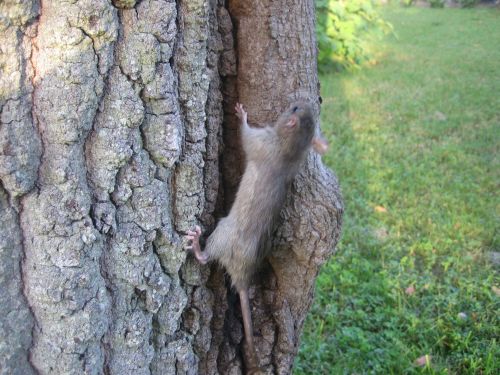
  4. Oh rats! Dealing with rats humanely

    Posted on

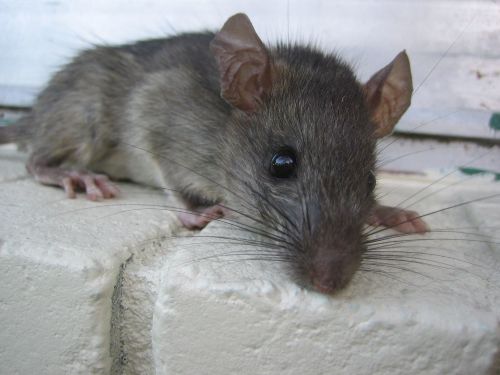
    Have you ever stopped to think about the impact rat poison has on rats?

    Two inspiring women, one in her teens, have put a website together called Rat Poison Facts to help people understand the impact.

    Ways to keep rats and mice away from your home humanely

    They want to bring an end to animal mistreatment and the poisoning of the ecosystem by stopping the use of rat poison.

    So the goal of Rat Poison Facts is to raise awareness:

    • How some rodent control methods are inefficient
    • How some rodent control methods could be dangerous for children, pets and other wildlife
    • How some rodent control can harm our ecosystems
    • How cruel and inhumane some methods to get rid of rats can be
    • Humane alternatives to dealing with rats

    When a rat takes in rat poison, there are all sorts of possible implications for the rat, such as internal bleeding, dehydration and dramatically bloated stomachs from overfeeding substances containing gas).  Death can be very slow and painful.

    Rat poison can be dangerous to people as well – young children end up in hospital every year because of it.  Pets may eat it by mistake.

    The website has information on things such as where to release a rat


    The site has very helpful education resources, with useful links, including how you can get rid of rats in a humane way, with humane ways to keep your house rat-free that work.

    You can find more information  on RatPoisonFacts website.


  5. BatPoison.com helps stop bat poisoning through education

    Posted on

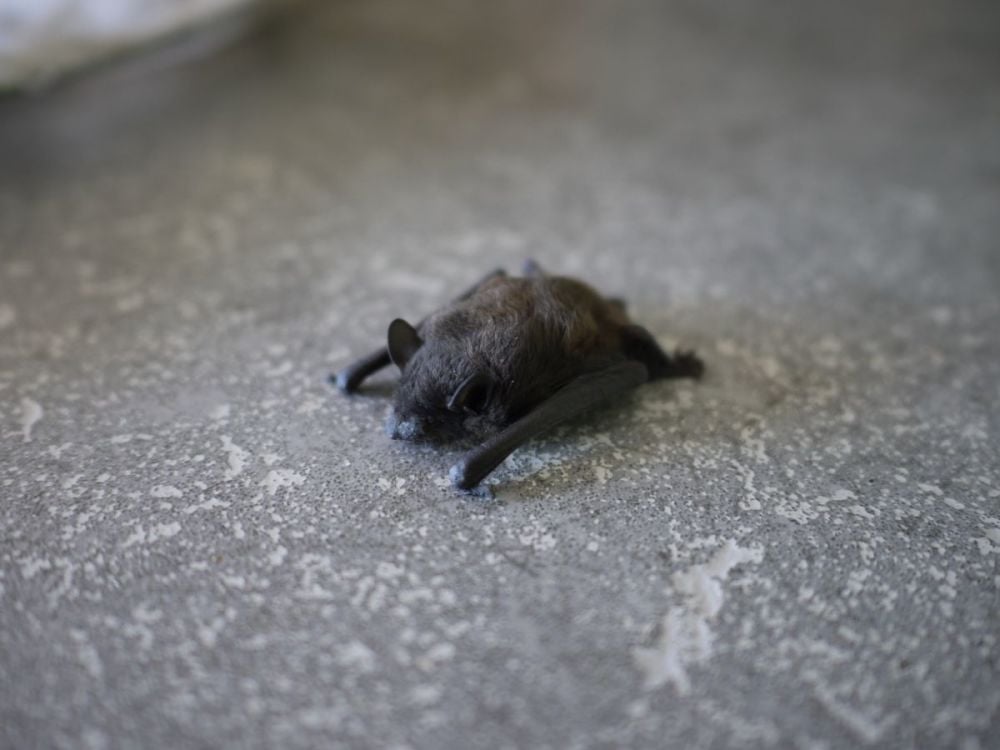
    Do you love bats and want to know how to help them?

    Have you found a bat in your home?

    One of the problems facing bats is that many people who find them in their homes try to kill them with poison.   This is wrong – there are alternatives to dealing with bats.

    Batpoison.com was set up because research showed that 400 to a thousand people in the US search for the term “bat poison” every month;   even more looked for “how to kill bats”. 

    Visit BatPoison.com for more information


    Batpoison.com is designed to help people discover why bat poison is bad, and to give you alternatives to removing bats from homes.   It’s also got information on how bats benefit us.

    Visit Batpoison.com to find out more.